
Marta Editions
Marta Editions is the publishing imprint of Marta, a Los Angeles contemporary art gallery. It releases limited-edition publications and artworks through managed launches, pre-orders and subscriber-driven campaigns.

An Editions Engine
The existing Marta Editions site had good bones but no strategy behind it. It was hard for search engines to find, and commercial decisions regarding releases – how large an edition, at what price, offered to whom first – were made on instinct, with the financial outcome only clear after the fact. This increased risk for every dollar that was invested into the venture.
Product and Commercial Architecture
The editions platform runs on a headless architecture, combining Shopify for commerce with Sanity CMS for content.
We developed a longer-form narrative on each artist's page, carrying the work further and justifying the price – explaining the object and process deeply.
When launching the edition, marketing and customer acquisition were tightly integrated into the platform through automated email journeys and audience segmentation, allowing editions to be launched progressively to increasingly wider audiences.
|
||||||||||||||||||||||||||||||||||||||||||||||||||||||||||||||||||||||||||||||||||||||||||||||||||||||||||||||||||||||||||||||||||||||||||||||||||||||||||||||||||||||||||||||||||||||||||||||||||||||||||||||||||||||||||||||||||||||||||||||||||||||||||||||||||||||||||||



 marta.editions





Workflow Focus
Alongside this, we developed a custom publishing workflow allowing content and product information to move through staging and production environments. This contained automated validation checks, ensuring releases were reviewed before publication.
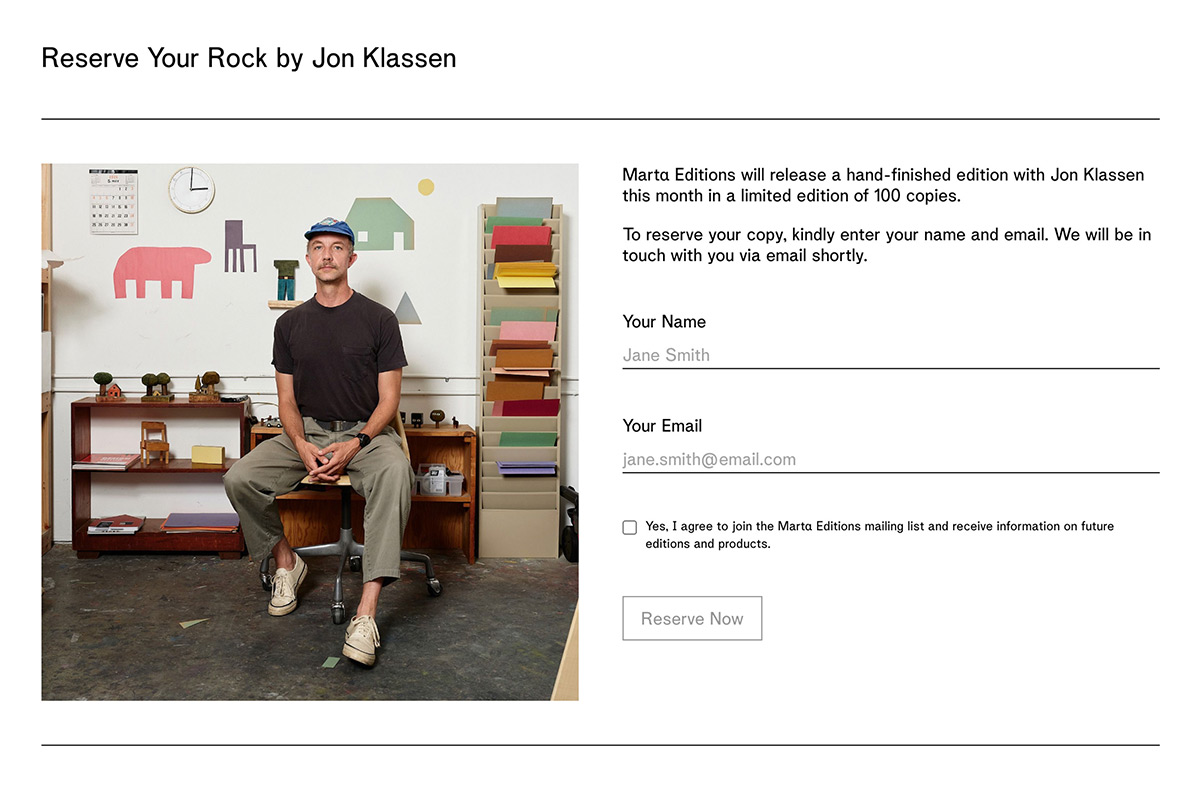
A gated approach was utilised for releases, with visitors able to register interest in forthcoming editions before public release, automatically entering into dedicated Mailchimp journeys. This allowed highly engaged customers to receive priority access before wider newsletter and public launches, increasing the audience size and creating a specific target group for the release.
1
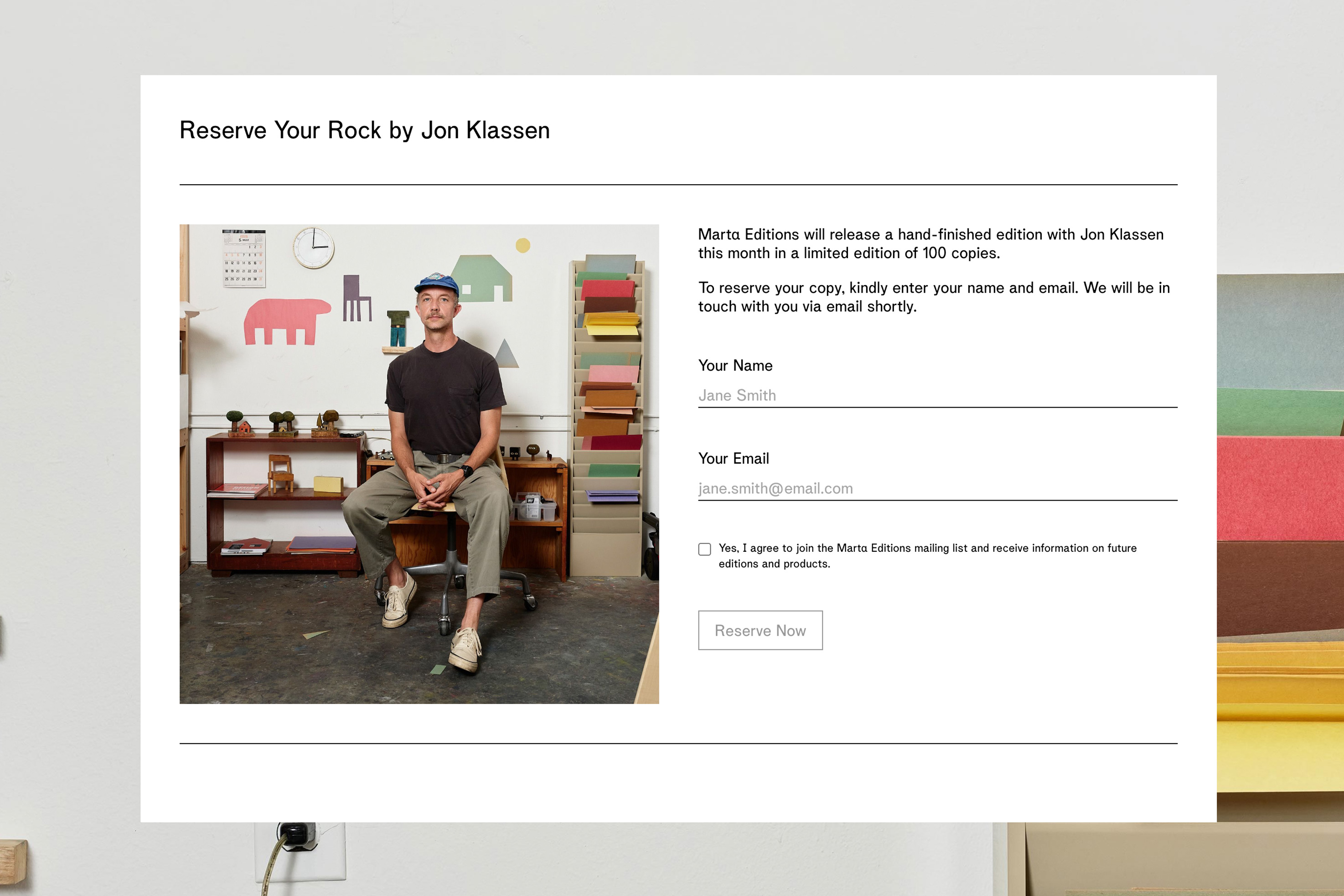
Register Interest
Open to anyone already following the gallery and the artist. This builds a specific list for the edition release
2
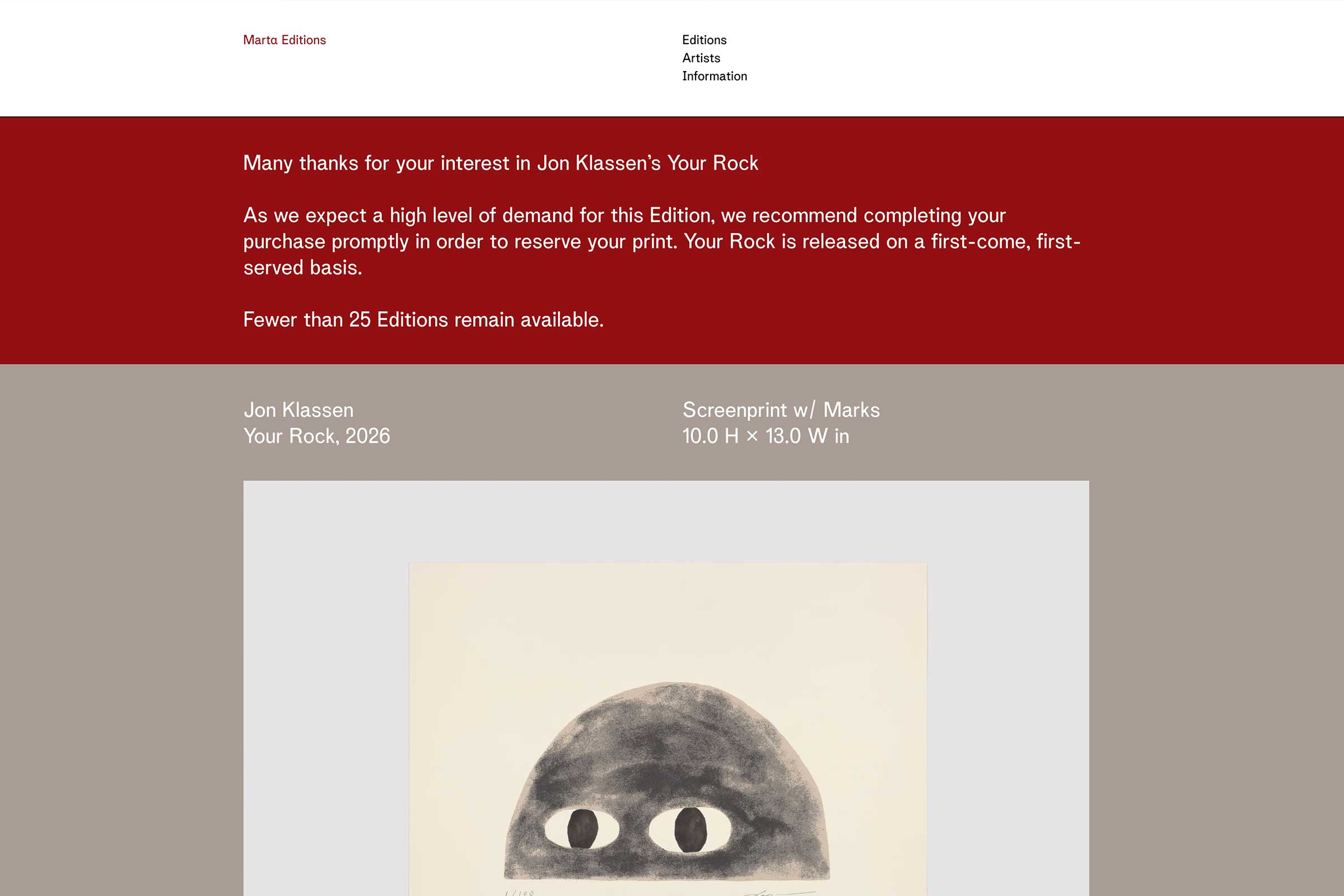
Priority Access
Everyone who registered gets first pick — before the edition goes to further audiences
3
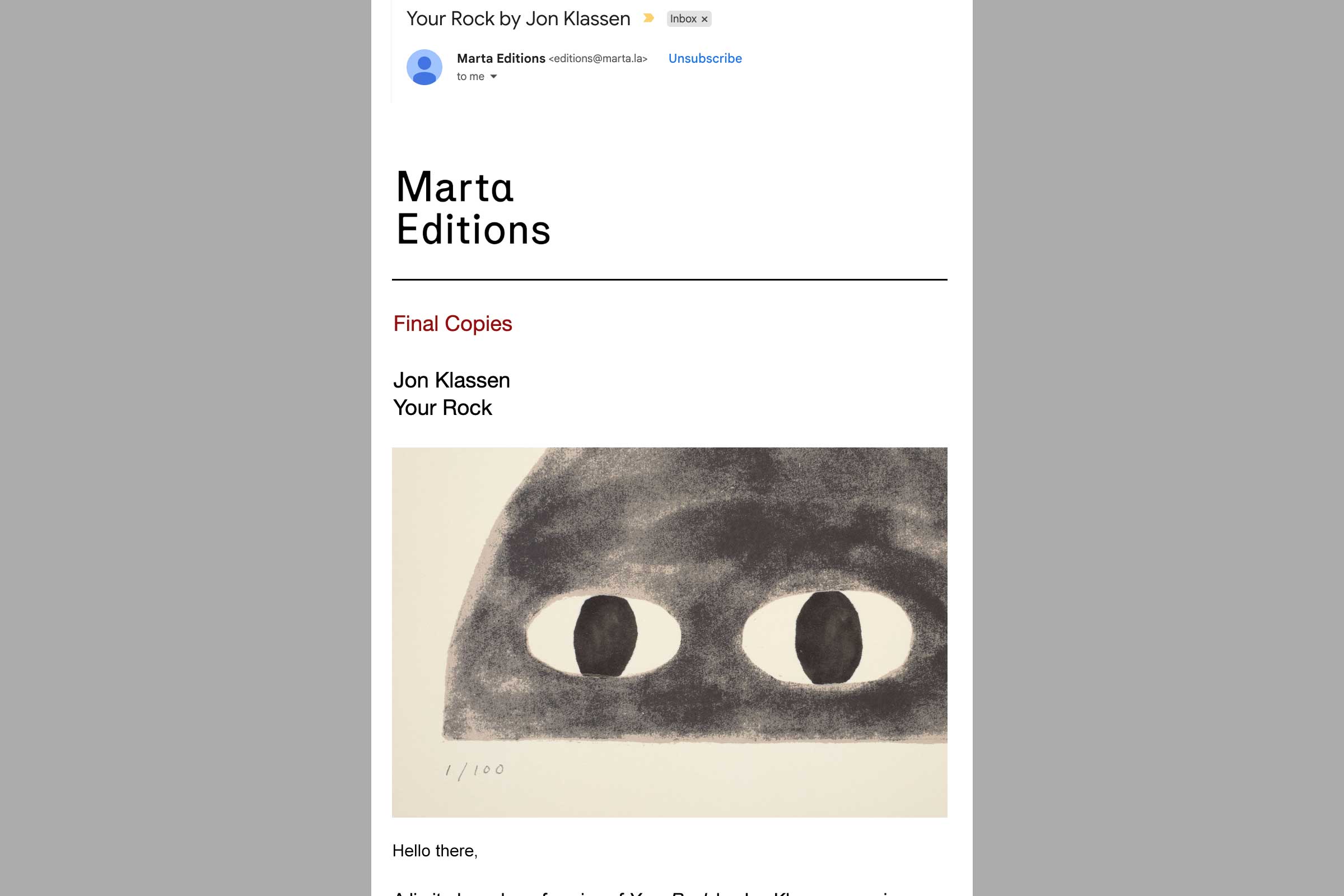
Wider Launch
Then the full newsletter. This goes to the gallery's audience
4

Public Launch
Last, the website and social channels
That gated segmentation, SEO and data capture gave us something to model with. With audience and behaviour now measurable, we could forecast the likelihood of an edition selling out – not aiming to constrain the curation, but give the gallery financial and risk oversight.
Probability Curation
The model pulled together the metrics that shape a release – audience size, past conversion rates, price point, edition size – and returned a working estimate of how likely an edition was to sell out.
The gallery was able to utilise this throughout the curation and development process. With curatorial choices being made, the curators could see the commercial shape of each one and adapt the edition around it – adjusting size, price or release plan against the probability of selling out, rather than committing first and finding out later.
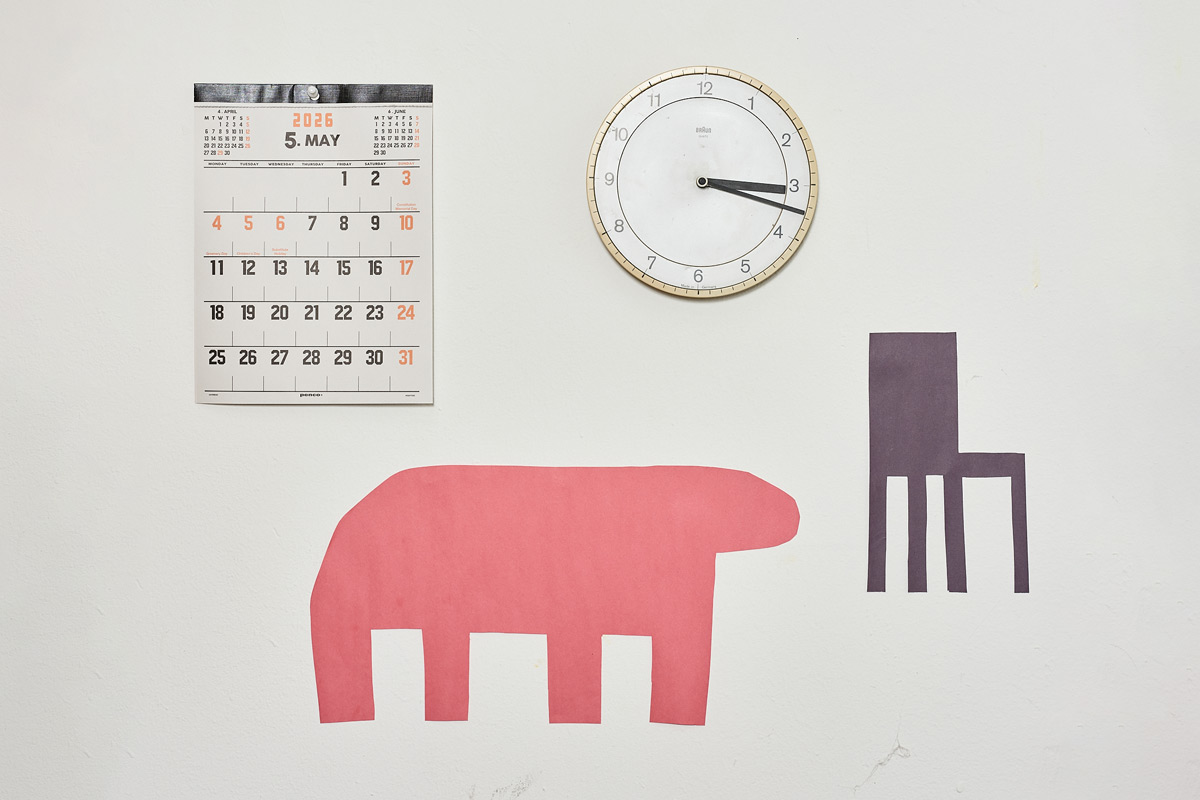

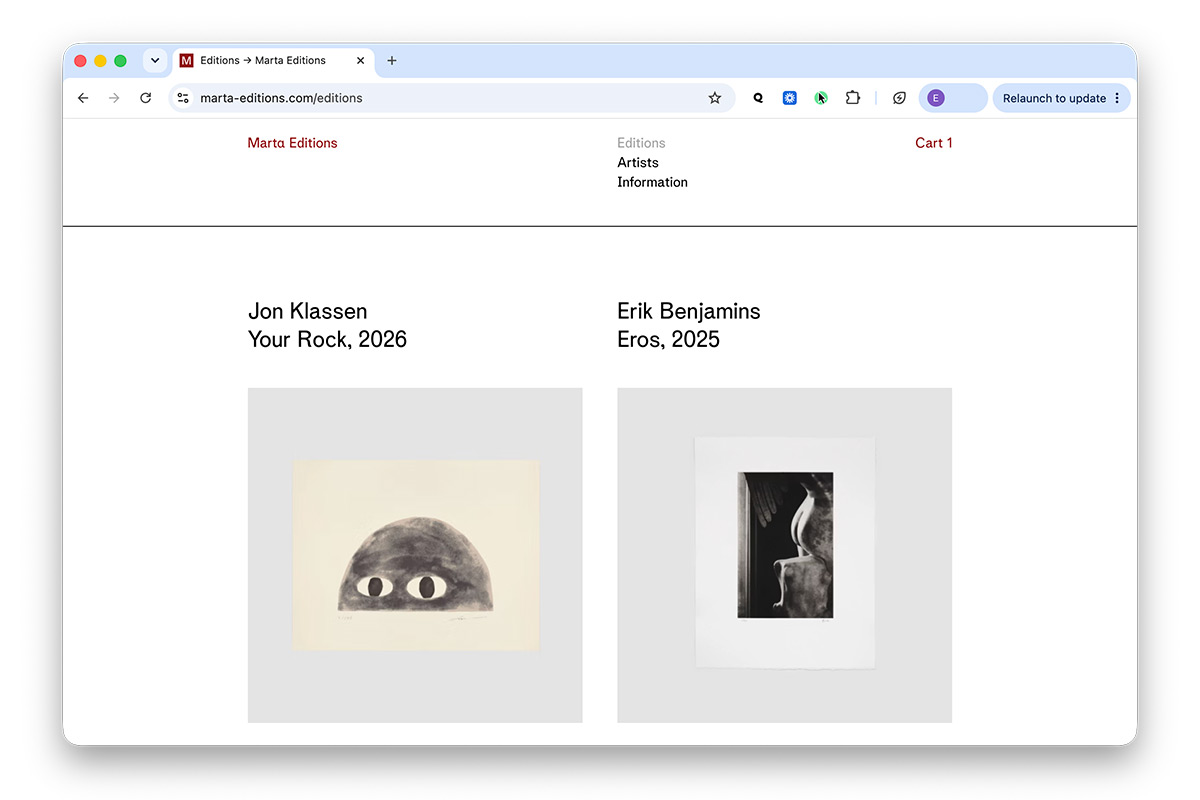
When Your Rock was planned, the model put owned-list conversion at around 70 of 100 copies – strong, but short of clearing the run alone. That shaped the release: the public launch was built in as the essential closer, not a nice-to-have. It turned out to be close – over 60% went within a week, more than half on the first day. The gallery covered their overheads in two hours. Before payment terms had even come due.
At the end of each release, a report compared the prediction against what actually happened – a wash-up that fed straight back into the model.
1

Strategy & Curation
Define size of edition, curation and price, based on probability. Ensure risk is taken in a measured approach
2
Build
Ensure succinct data capture and SEO as we build assets
3

Model
Forecast probability of sell out and tweak progression based on this
4
Launch
A stepped and progressive launch to ensure highest conversion rates
5

Wash-up
Utilise learning to de-risk next release, and improve conversion rates
Sharpen The Choice
With each release the model got more accurate, sharpening the forecast for the next one. It never overrode a curatorial choice; it gave the financial oversight to make that choice with eyes open – keeping prediction in service of curation, not the other way round.
The shape of the commercial engine – strategy (to) build (to) data model sharpens every decision after it. It's built for small businesses making high-stakes calls with money being invested, so they commit with the financial shape in view instead of finding out after the fact.
Technical Stack
- Shopify (Headless Commerce)
- Sanity CMS
- React / Next.js frontend
- Mailchimp marketing automation
- Automated deployment and publishing workflows
Capabilities Demonstrated
- Headless commerce architecture
- CMS workflow design and deployment automation
- SEO strategy and implementation
- Customer journey design
- Marketing automation and audience segmentation
- Analytics and conversion optimisation
Impact
40%*
increase in newsletter sign-ups
*(1 month period)
179%
increase in new users
$25*
revenue per visitor exceeded
*(1 month period)
11.5%
conversion rate